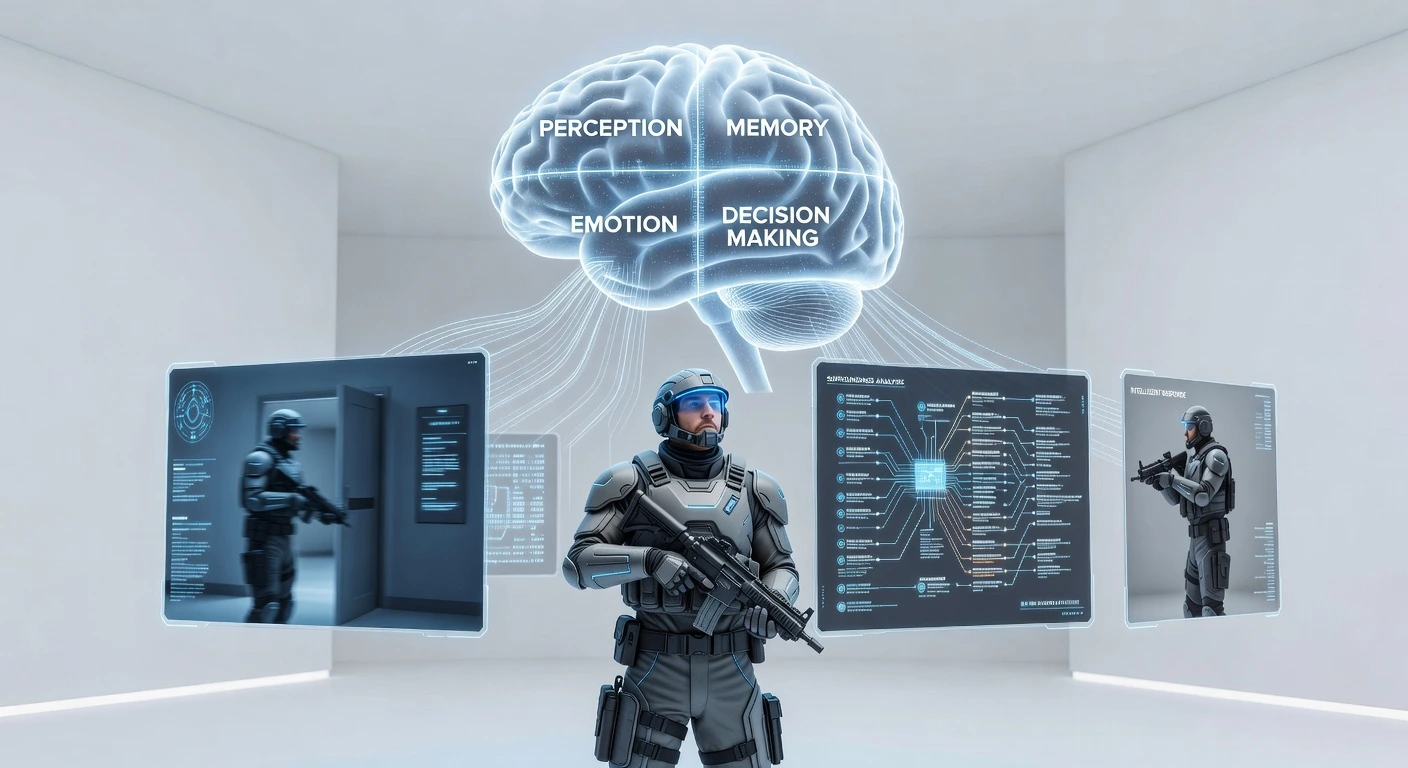
There’s a moment I still remember vividly from playing a stealth game a few years back. I was hiding behind a crate, watching an enemy guard. Instead of following his predictable patrol route, he stopped. Looked around. Then did something unexpected he walked over to a door I’d left slightly open earlier and investigated it. He remembered that door had been closed before.
That small moment changed how I thought about game characters. This wasn’t scripted behavior or simple pattern matching. This was cognitive simulation at work.
Beyond Scripted Behaviors
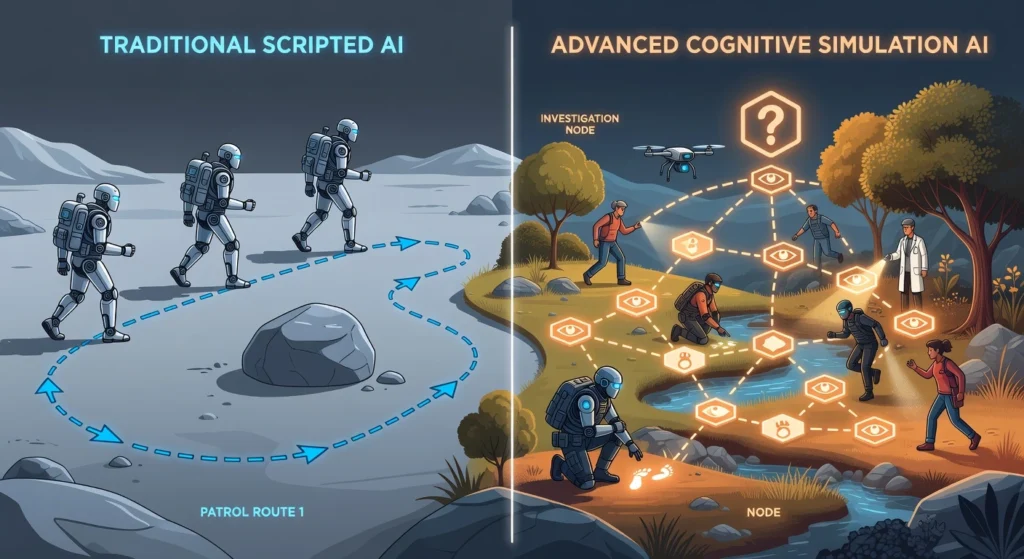
For decades, game developers relied on relatively simple systems to create the illusion of intelligent characters. State machines, behavior trees, predetermined patrol routes. These approaches worked well enough for many games, but they created predictable, exploitable patterns. Players quickly learned that enemies would always check the same spots, always react the same way to identical situations.
Cognitive simulation AI represents a fundamentally different approach. Instead of programming specific behaviors, developers create virtual minds with simulated cognitive processes perception, memory, decision making, even emotional states. Characters don’t follow scripts. They process information and make decisions based on what they know and how they feel.
The difference might seem subtle on paper, but it transforms gameplay completely.
How Cognitive Simulation Actually Works
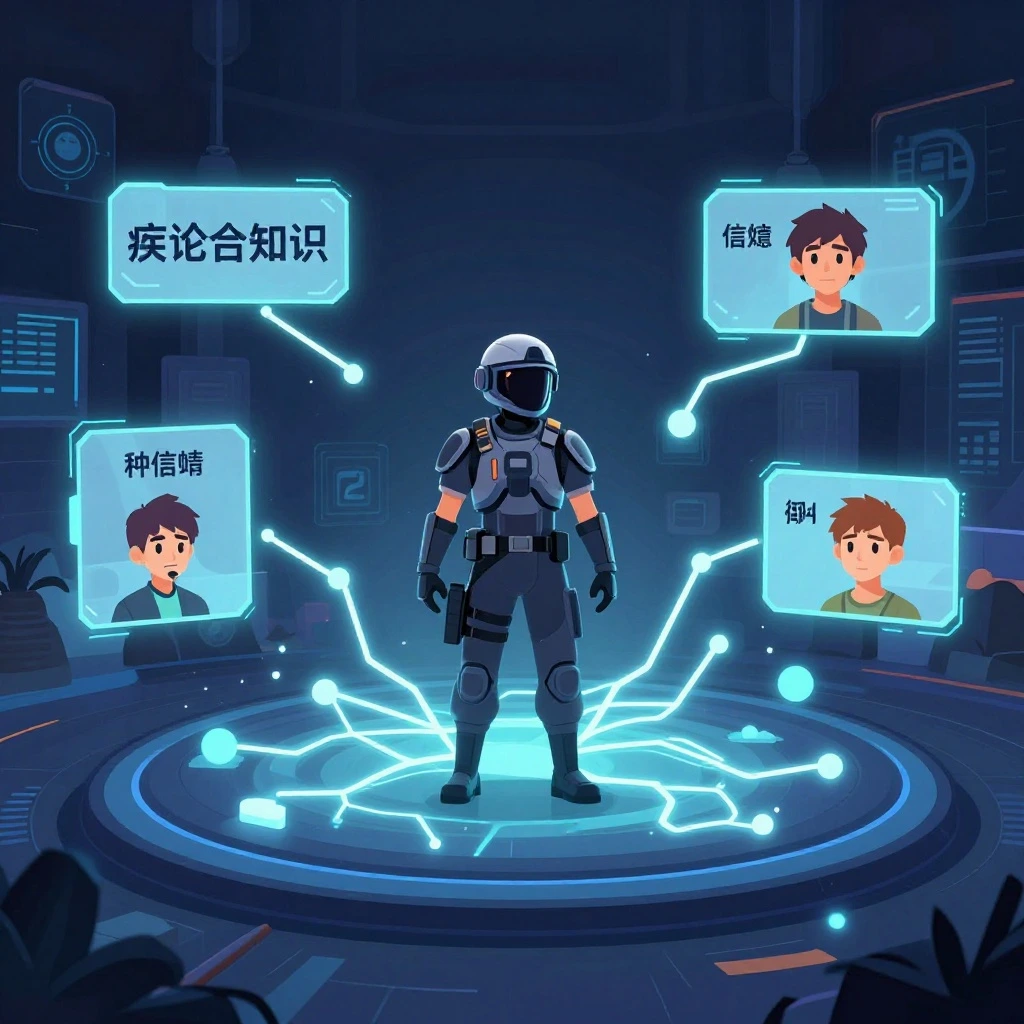
Let me break this down without getting too technical. Traditional game AI asks: “What should this character do right now?” Cognitive simulation asks: “What does this character know, believe, want, and feel and given all that, what would they decide to do?”
These systems typically incorporate several interconnected components. A perception system determines what the character can see, hear, or otherwise sense. A memory system stores and retrieves relevant information from past experiences. A belief system maintains the character’s understanding of the world, which may or may not match reality. An emotional model influences decision priorities and behavioral tendencies.
When these components work together, characters exhibit emergent behaviors that weren’t explicitly programmed. They can be surprised, suspicious, fearful, or curious based on their simulated mental states.
Real Examples Worth Studying
The gaming industry has produced some remarkable implementations of these principles. “F.E.A.R.” from 2005 remains a landmark title, featuring enemy soldiers who dynamically coordinated tactics, communicated about player positions, and adapted to different combat situations. Players couldn’t memorize patterns because patterns didn’t exist enemies genuinely responded to circumstances.
More recently, “Alien: Isolation” demonstrated cognitive simulation in horror gaming. The xenomorph creature operates on a sophisticated behavioral system that learns from player tactics. Hide in lockers too often and it starts checking them. Use the motion tracker constantly and it learns to listen for the beeping sound. The creature develops what amounts to intuition about player behavior.
“Middle earth: Shadow of Mordor” introduced the Nemesis system, where enemy orcs remember previous encounters with the player. An orc who killed you might mock you about it later. One you scarred in battle might return seeking revenge. These characters develop persistent memories and personalities that create genuinely personal stories.
The Development Challenge
Creating these systems isn’t easy. I’ve talked with developers who’ve worked on cognitive simulation implementations, and they consistently describe it as one of gaming’s most complex design challenges.
The computational demands alone present significant hurdles. Simulating genuine cognitive processes for multiple characters simultaneously requires substantial processing power. Developers must constantly balance simulation depth against performance requirements, especially on console hardware with fixed specifications.
But the harder challenge is often design related. How do you create characters smart enough to be interesting but not so smart they become frustrating? An enemy with perfect memory and optimal decision making wouldn’t be fun to play against. Game designers must intentionally introduce limitations and imperfections into their cognitive models essentially making characters realistically flawed rather than perfectly rational.
There’s also the debugging nightmare. When character behaviors emerge from complex cognitive interactions rather than explicit programming, tracking down problems becomes exponentially harder. Why did that character do that weird thing? Well, because three hours ago something happened that affected their memory, which influenced a belief, which shifted an emotional state, which ultimately produced that strange decision.
Applications Beyond Combat
While combat scenarios showcase cognitive simulation most dramatically, the technology has broader applications throughout game design.
Social simulation games benefit tremendously from characters with genuine cognitive depth. “The Sims” series has progressively incorporated more sophisticated emotional and cognitive modeling, creating characters whose relationships and life decisions feel organic rather than random.
Narrative driven games use cognitive simulation to create companions and NPCs who respond authentically to story developments. When characters remember your choices and form genuine opinions about your actions, moral decisions carry more weight.
Open-world games leverage these systems to create living environments where inhabitants pursue their own goals, form relationships, and respond to changes in their world even when the player isn’t watching.
Where Things Get Interesting
The current frontier involves more sophisticated emotional modeling and social cognition. Researchers and developers are exploring how characters might develop genuine relationships with each other based on accumulated interactions. How they might hold grudges, form alliances, or experience complex emotional states like jealousy or gratitude.
Some studios are experimenting with cognitive architectures inspired by actual psychological research modeling attention, working memory limitations, cognitive biases, and emotional reasoning in ways that mirror human mental processes.
The goal isn’t necessarily perfect intelligence. It’s believable intelligence. Characters who feel like they have inner lives, even when we know they’re simulations.
The Human Element
What fascinates me most about cognitive simulation in games is how it changes our relationship with virtual characters. When a character genuinely remembers what we’ve done and responds accordingly, something shifts. We start treating them differently more carefully, more personally.
That’s the real power of this technology. Not creating smarter enemies or more efficient companions, but creating characters who feel like they matter.
Frequently Asked Questions
What is cognitive simulation AI in gaming?
It’s a game design approach where characters have simulated mental processes perception, memory, emotions, and decision making rather than following predetermined scripts.
How does it differ from traditional game AI?
Traditional AI follows programmed behavior patterns. Cognitive simulation creates characters who process information and make decisions based on their simulated understanding of situations.
Which games feature notable cognitive simulation?
“F.E.A.R.,” “Alien: Isolation,” “Shadow of Mordor,” “The Last of Us,” and recent entries in “The Sims” series all feature sophisticated cognitive systems.
Does cognitive simulation require powerful hardware?
Yes, simulating cognitive processes is computationally demanding, though developers optimize systems to run efficiently on various platforms.
Can characters actually learn from player behavior?
Some implementations allow characters to recognize patterns in player behavior and adapt strategies accordingly, creating genuinely responsive opponents.
Is cognitive simulation only used for enemies?
No, it’s applied to companions, NPCs, and social characters throughout games to create more believable and responsive virtual worlds.